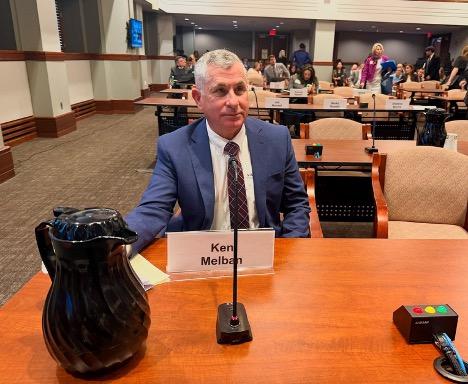
On December 3, 2025, Califonia Avocado Commission President Ken Melban testified before a federal panel reviewing the United States-Mexico-Canada Agreement (USMCA) in Washington D.C. See below the Commission’s release today; the Commission will keep growers updated.
###
California avocado leader warns USMCA panel that pest risks, surging imports threaten industry’s viability
California Avocado Commission president urges restoration of U.S. inspection protocol in Mexico, seasonal import limits
WASHINGTON D.C. — California Avocado Commission President Ken Melban told a federal panel reviewing the United States-Mexico-Canada Agreement (USMCA) that two import-related threats are “threatening the viability of the California avocado industry”, potentially devastating pest risks from Mexican avocados and surging low-priced imports that he says could make the industry unsustainable.
Testifying at the hearing on the operation of USMCA, Melban said the first concern involves phytosanitary risks tied to changes in how Mexican avocados are inspected before entering the United States. For 26 years, from 1997 to 2024, he said U.S. Department of Agriculture rules required Animal and Plant Health Inspection Service (APHIS) personnel to conduct both orchard and packinghouse inspections in Mexico, providing “the safeguards needed to protect U.S. production.”
In early 2024, after cartel activity threatened APHIS personnel, the previous administration replaced U.S. inspectors with inspectors employed by Mexico, Melban told the panel. He said that decision preserved ongoing trade but “destroyed the paramount safeguards of the 1997 protocol, sharply increased the pest risks, and made the inspection system more susceptible to cartel activity.”
“As a sign of how deficient the system has become, when APHIS conducted the in-field inspections prior to 2024, pest interceptions in the packinghouses were rare; after the APHIS inspectors were withdrawn, over 150 pest interceptions were reported in just a four-month period,” Melban said. “This is a serious infestation risk waiting to happen, and when it does, it could financially break our industry.”
Melban urged a two-part USMCA response. “First, the 1997 protocol, including all APHIS inspection requirements, should be fully reinstated and memorialized under USMCA,” he said. “Second, the Mexican government, not our industry, should bear the responsibility for fixing the cartel concerns. If the Mexican government fails to ensure the safety and integrity of the process, U.S. access should be shut down until those risks are adequately solved.”
Turning to what he called an “equally pressing concern,” Melban said surging, low-priced imports from Mexico and other suppliers are undermining the economic sustainability of California avocado growers. Citing a new USDA report, he said Mexican production levels rose 134% and exports to the United States increased 312% over a recent 14-year period, making Mexico “by far the dominant player in the U.S. marketplace,” with Peru a smaller but growing source of market disruption during California’s marketing season.
“While imports thrive, the trendlines for our industry all point to decline,” Melban said. Over the past two decades, he told the panel, California avocado grower ranks have shrunk by 55% and production levels have dropped 46%. Despite significantly higher costs, he said, market prices have eroded, with the average grower price falling to $1.08 per pound in August — “a level no California grower can sustain for long.”
Because foreign avocado production is in significant oversupply and U.S. consumption is flat, Melban said, “the downward trends in our industry have no chance of abating on their own.” He called on the U.S. government to restore market equilibrium by imposing a tariff-rate quota (TRQ) arrangement on fresh avocado imports during the California industry’s March–September marketing season.
Click here to view the complete transcript of Melban’s testimony