The California Avocado Commission released a new video Thursday as part of a broad advocacy campaign urging federal officials to put American farmers first by adopting a seasonal import policy for Mexican avocados during California’s marketing season, March to September.
The video is available here:
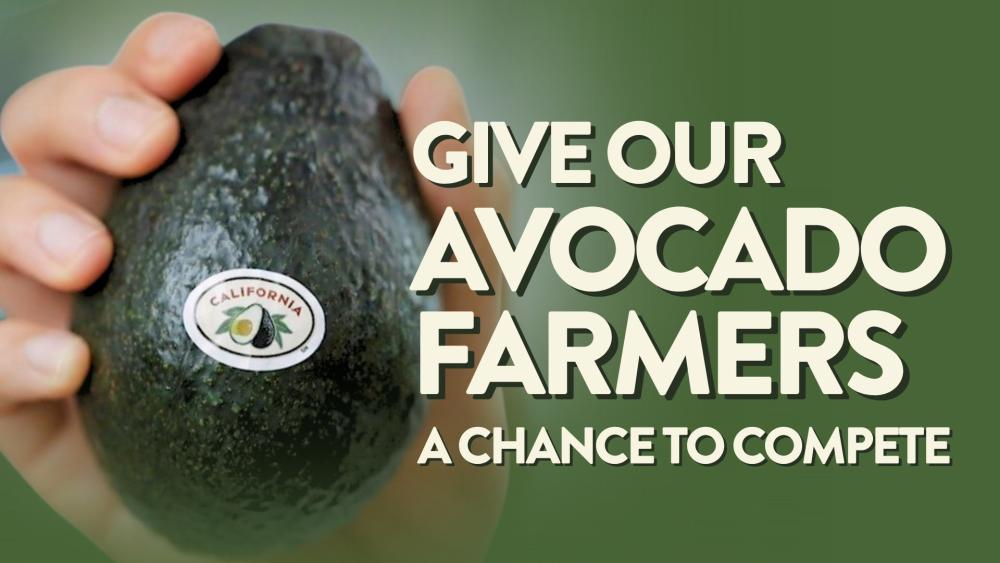
The video features celebrity chef and restaurant owner Andrew Gruel; Jayme Franklin, founder and CEO of The Conservateur; Rep. Vince Fong, R-Calif.; and California avocado farmers Rachael Laenen of Kimball Ranches, Andy Sheaffer of Vista Punta Gorda, Robert Jackson of Jackson Ranch, John Haskett of Lucky Charm Farms, and Maureen Cottingham of CamLam Farms.
The release comes as U.S. Trade Representative Jamieson Greer announced Wednesday that the United States did not agree to renew the United States-Mexico-Canada Agreement in its current form. The agreement, which governs much of the trade among the United States, Mexico and Canada, remains in force while the countries address its shortcomings. Greer also said the United States will meet with Mexico the week of July 20 for a third round of bilateral negotiations related to the trade agreement’s joint review.
The Commission said those talks are directly relevant to California avocado growers because of Mexican avocado imports, cartel involvement in Mexico’s avocado industry, pest inspections and risks, and market oversupply all affect whether U.S. trade policy is working for American farmers and consumers.
“We are on the precipice of a culinary disaster, I call it, because there may come a day soon where we are no longer able to buy California avocados in our own backyard because of the oversurplus of imports on the market that are ultimately going to wipe out California avocados,” Gruel said.
The Commission is calling for a seasonal Tariff Rate Quota on Mexican avocado imports from March through September, California’s primary harvest window. Under the proposal, a set volume of Mexican avocados would continue entering the U.S. market during those months at a zero tariff rate. Imports above that level could still enter, but at a high tariff rate.
“If we believe in America First and Making America Healthy Again, that should include the food that we put on our tables,” Franklin said. “So next time you're at the grocery store, look for California-grown avocados. I'll always support the hardworking California families that grow the best avocados in the world.”
“California avocado growers are not asking to stop trade, we're asking for the opportunity to compete fairly in our own market,” said Ken Melban, president of the California Avocado Commission. “A seasonal Tariff Rate Quota is a balanced, common-sense solution that supports orderly markets while protecting America's domestic food production capacity. This video tells the story of our growers and demonstrates why thoughtful trade policy is essential to preserving a vibrant domestic avocado industry.”
The video also focuses on cartel involvement in Mexico’s avocado industry. The Commission has previously raised concerns that cartel threats and violence contributed to reduced U.S. oversight of Mexican avocado inspections, increasing the risk that invasive pests could enter the United States through imported fruit.
“From a single tree in Southern California, the Hass avocado became an icon, and it is 100% American,” Gruel said in the video.
“Buying local means that you're getting a fresher product because there's a shorter supply chain,” Gruel said. “side by side , the California avocado versus an imported avocado, it's a better product hands down. It's richer, it's creamier, and that's the most important thing. On top of all of that, you're supporting a local economy and you're supporting American farmers, and that's the backbone of our economy.”
“In Mexico, cartels are extorting growers, controlling portions of the supply chain, and using violence and intimidation to maintain that control,” Franklin said in the video. “Whatever your perspective is on trade policy, protecting American agriculture and ensuring a safe, reliable food chain is necessary.”
“Many Americans are buying Mexican avocados and don't even know that they are not grown with the same worker protection and pay standards, and environmental protections that we uphold here in the U.S.,” Franklin said.
“If we believe in America First and Making America Healthy Again, that should include the food that we put on our tables,” Franklin said. “So next time you're at the grocery store, look for California-grown avocados. I'll always support the hardworking California families that grow the best avocados in the world.”
“California avocado farmers are being crushed by foreign imports, and so we need to take immediate trade action to help and support our California avocado farmers,” Fong said in the video.
“California avocado farmers want an opportunity to compete, to succeed, and so we need to limit foreign imports into our market during our peak seasons so that our avocado farmers can prosper,” Fong said.
“This isn't a problem that is coming down the line,” Laenen said. “This is a problem that we have here today. We're calling on our Administration to give us some help and put American farmers first.”
“We're not on a level playing field, and we need to make American farmers at least have a secure spot, a place in time where we can produce fruit and sell it for more than what it costs us to grow,” Haskett said.
“Our ask is simple,” Cottingham said. “We just want to be able to compete, and we want to be able to compete in our market.”
“With the TRQ, we're not looking for a handout, we're looking for a chance to compete,” Sheaffer said.
The Commission said the proposal should be considered as the United States reviews its trade relationship with Mexico. The commission said its goal is not to end avocado trade, but to ensure that trade policy does not allow foreign oversupply, cartel-compromised supply chains or weakened inspection systems to push American growers out of their own market.